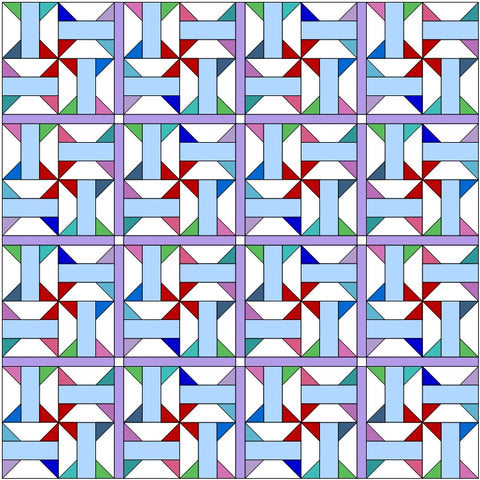
Let’s learn how to sew together an Arkansas Traveler quilt block. Whether you dig into your scrap bag or plan out your color scheme, you’ll make a beautiful quilt! This Ladies Art Company block is a spool-type block and is an easy block to put together. Using only snowballed corners and rectangles the block goes together quickly so you can have a full quilt in no time!

Fabric Requirements for a 12″ Finished Arkansas Traveler Quilt Block:
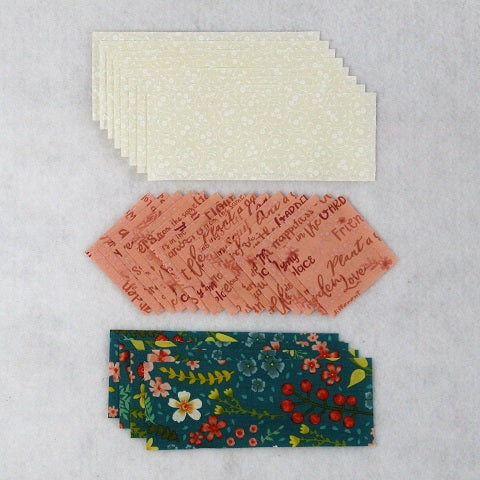
- Light/Ivory: 8 – 2.5″ x 6.5″ rectangles
- Medium/Coral: 16 – 2.5″ squares
- Dark/Teal: 4 – 2.5″ x 6.5″ rectangles
Sewing Directions:
Flying Geese Variation Units:
Step 1:
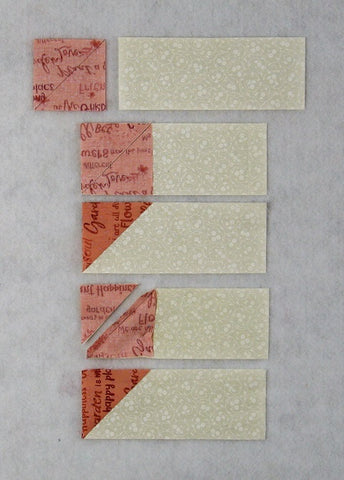
Using the eight Light/Ivory 2.5″ x 6.5″ rectangles and the 16 Medium/Coral 2.5″ squares, sew together eight Flying Geese Variation units. The unit is essentially a Flying Geese block but a longer rectangle is used. You can find my tutorial for making a Flying Geese block at https://quiltembroiderypdf.com/how-to-sew-a-basic-flying-geese-block. Here’s a pictorial rundown of the steps.
Step 2:
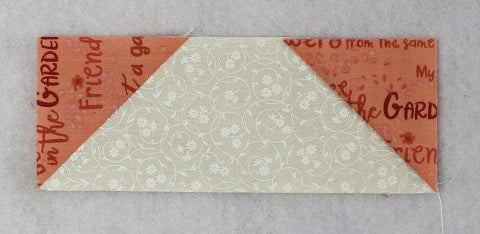
Then you repeat Step 1 on the other end of the rectangle so that the finished unit looks like the picture below. Repeat Steps 1 and 2 for a total of eight Flying Geese Variation units.
Spool Units:
Step 3:
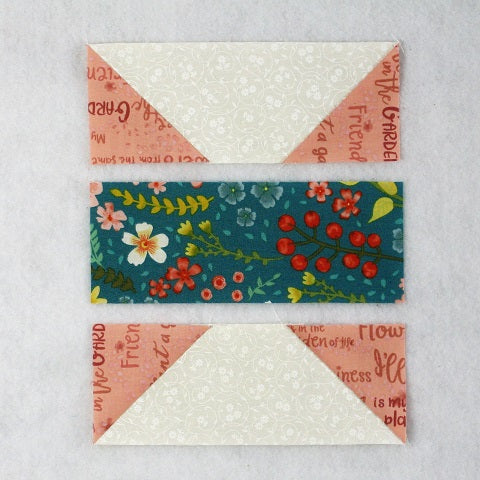
Lay out two of the Flying Geese Variation units and one Dark/Teal 2.5″ x 6.5″ rectangle as shown in the picture below.
Step 4:
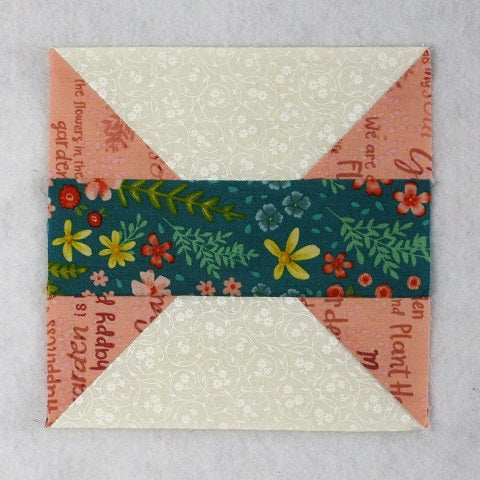
Now sew the units together as shown below, and
Step 5:
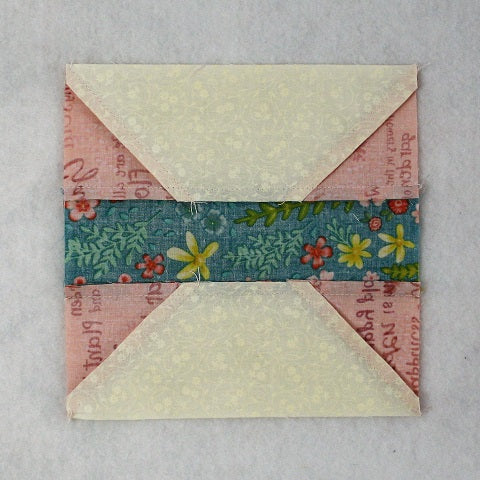
Press the seam allowances toward the center. Repeat Steps 3 – 5 for a total of four Spool units.
Putting It All Together:
Step 6:
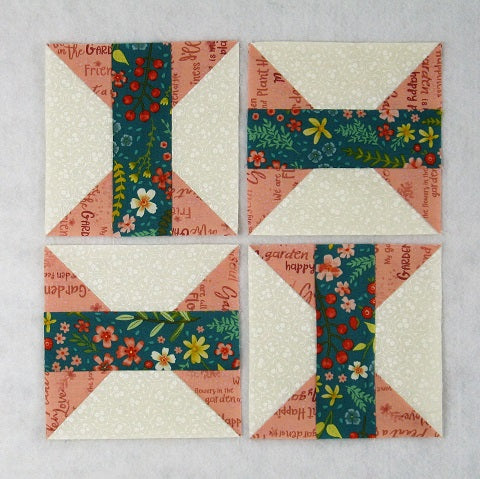
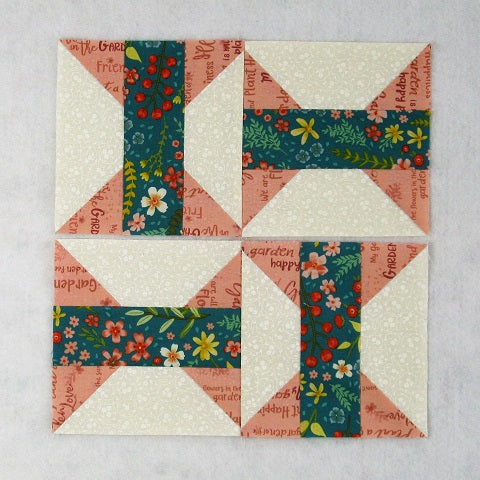
Lay out the Spool units as shown in the picture below. From here, the Arkansas Traveler block goes together like a typical Four Patch block.
Step 7:
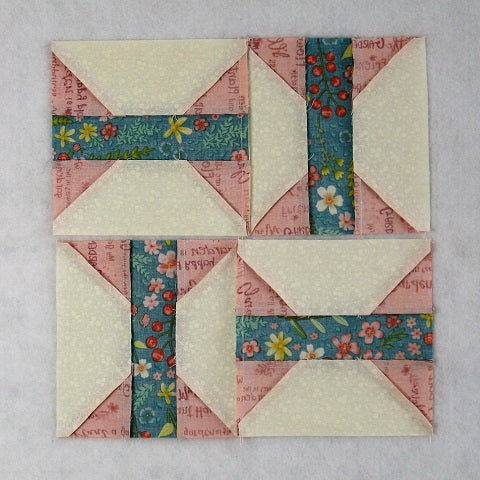
Sew the units into two rows as shown below.
Step 8:
Press the seam allowances toward the Light/Ivory fabric as shown in the picture below.
Step 9:
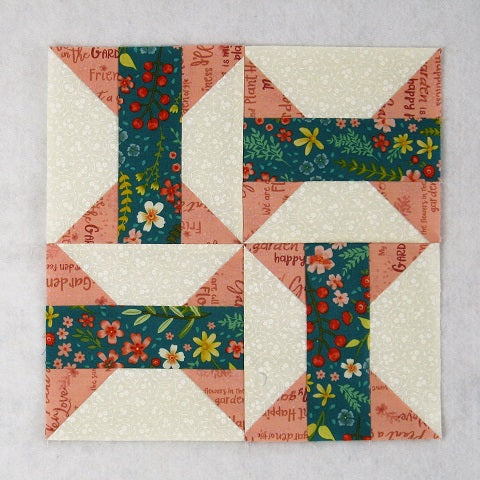
Now you can sew the two rows together to complete the block!
Step 10:
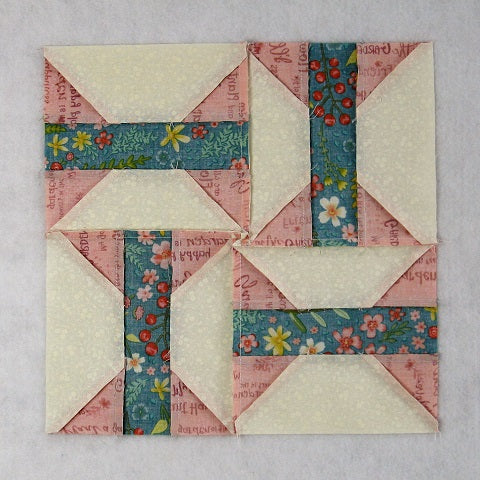
Just remember to press the seam allowances. I’ve used the tweak/twirl/furl method for pressing as you can see in the picture below.
Layout Ideas:
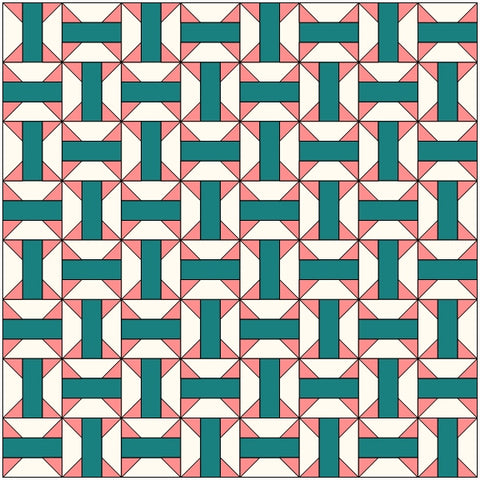
Here’s the basic 4 x 4 layout.
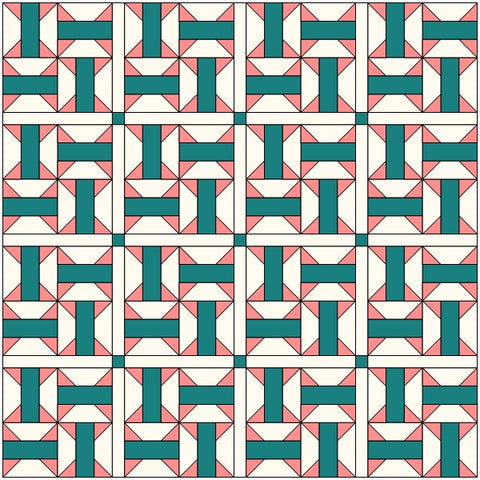
For this example, sashing and cornerstones were added.
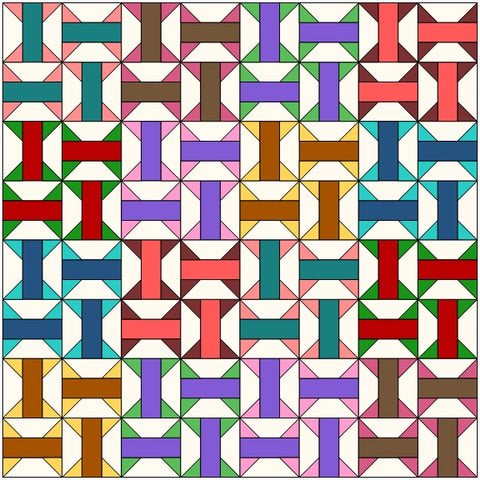
Here’s the basic 4 x 4 layout but done scrappy.
This example shows an on-point layout with alternating plain blocks and setting triangles.
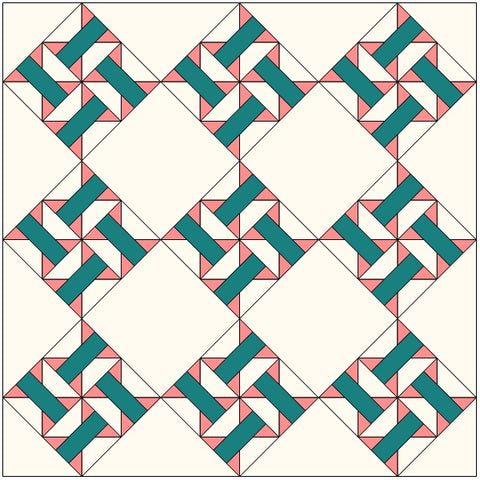
And this on-point layout has sashing and cornerstones and plain setting triangles.
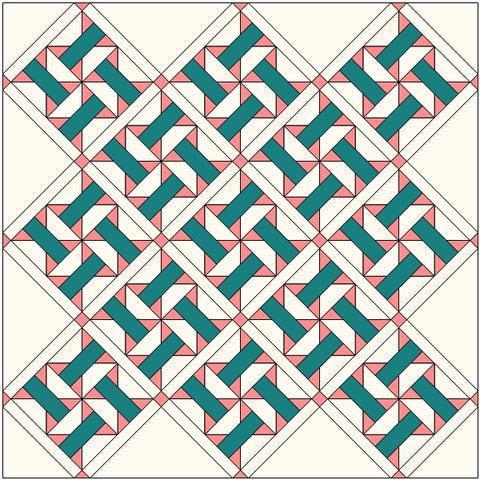
Here’s another scrappy idea with a pinwheel in the center.
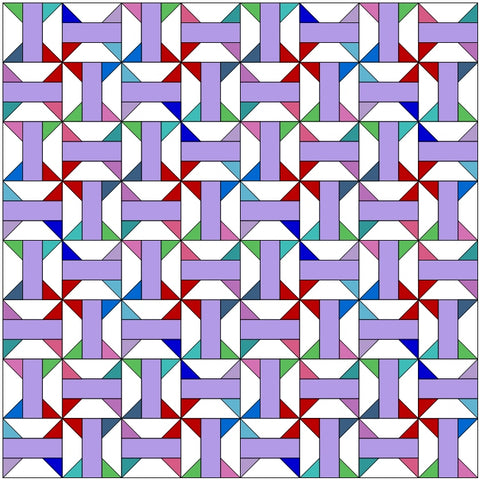
And another scrappy version with colored sashing and cornerstones.